Less programming
The path is derived from what the robot recognises at the station, instead of a manually written program for every part.

Research and development projectMore information in 2027
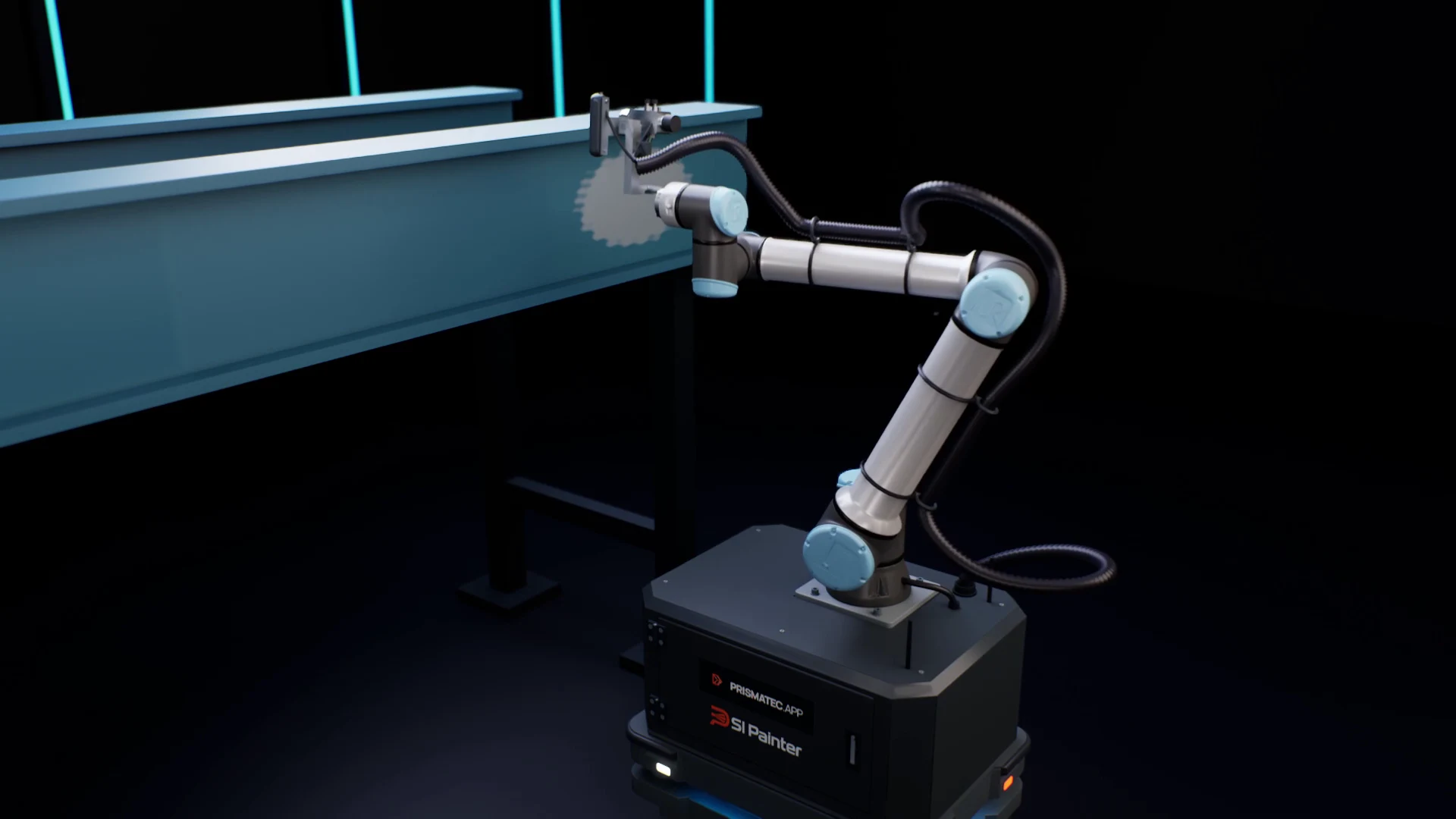
The robot recognises the shape and position of the surface, then plans the applicator motion and the spraying process on its own. This makes automation possible even where programming every part is hard to justify.
A conventional spray robot runs a stored program. For long runs of repeatable parts this works well, but a new part usually means a new program, and a change in part position may require correction. With short runs, a varied product mix and large structures, preparing programs can take so much effort that coatings are still applied by hand.
The path is derived from what the robot recognises at the station, instead of a manually written program for every part.
Before spraying starts, the robot determines the real position of the surface and takes it into account in motion planning.
Spray gun distance, angle and speed follow a plan matched to the surface and the coating material.
Technology
The robot combines spatial vision, machine learning and motion planning. Every step is based on data from the current station.
Depth and colour images give the robot a three-dimensional view of the part: its shape, edges and position relative to the arm.
From the geometry and coating parameters, the system determines spray passes, their order and overlaps. Machine learning models help interpret the task and adapt the application approach to the recognised surface.
The arm guides the spray gun along the planned path with controlled distance, angle and speed. Spraying is switched on only within the application area, and motion is planned with the arm's reach and surroundings in mind.
Mobile platform
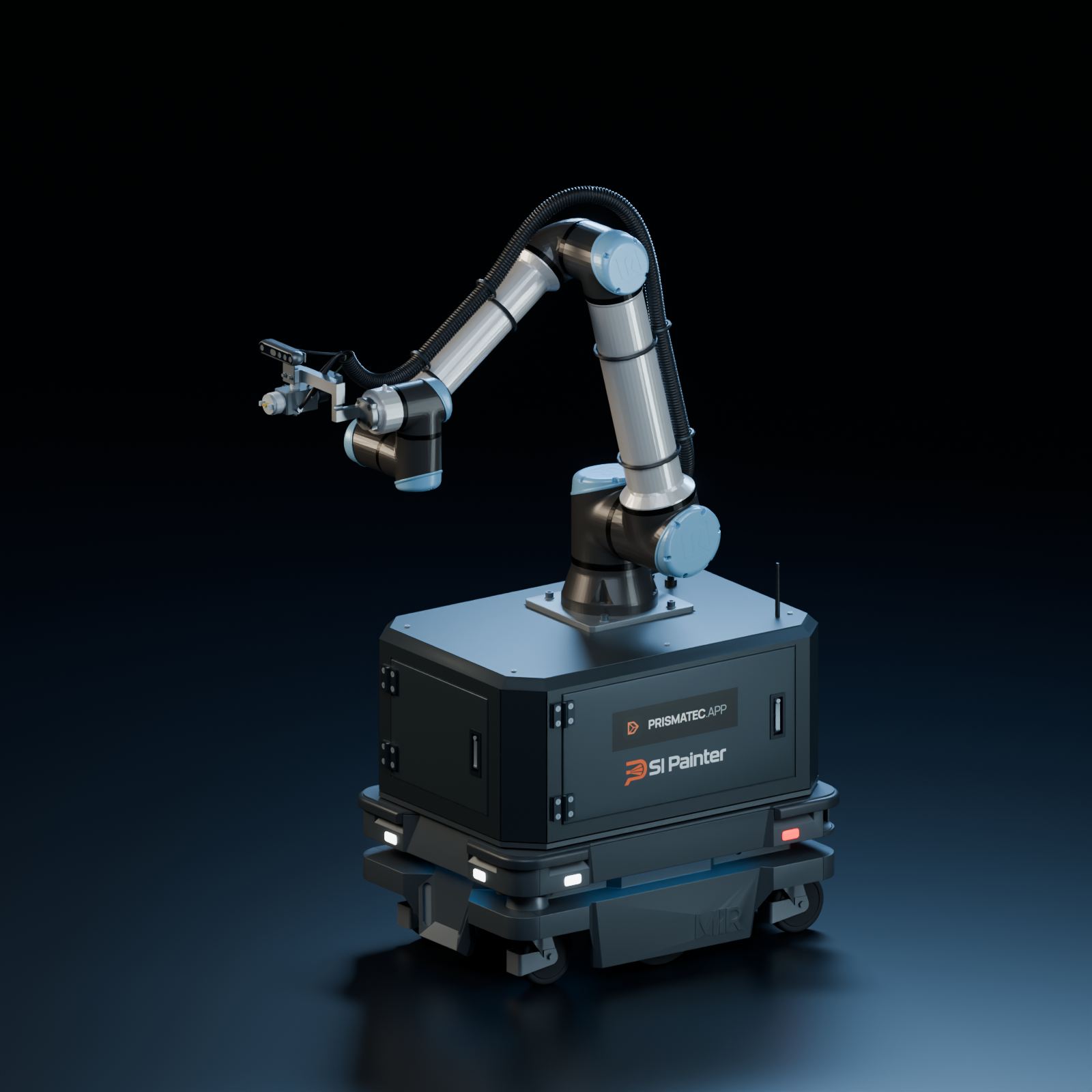
The mobile platform moves between work areas, extending coverage beyond the reach of an arm in a fixed position.
The arm is folded during travel between positions, making manoeuvring easier and protecting the equipment. After stopping, the robot recognises the visible section of the surface, plans the spraying process and applies the coating while stationary. It then moves to the next work area.
Intended for facilities with a frequently changing product mix, where programming a conventional robot for each run is hard to justify.
The mobile version is intended for structures that are difficult to move or do not fit a typical robotic cell.
The robot can apply a coating to a specified section of a surface, allowing selected areas to be renewed without coating the entire object.
Vision-language model
A vision-language model combines the camera image with an instruction written in natural language. It links the instruction to visible objects and surfaces to identify the application area. The operator describes the expected result.
Tell us about your parts, the coating materials you use and your working conditions. We will assess how autonomous coating application fits your facility and select a suitable configuration.
contact@prismatec.app ↗The robot configuration is selected according to the surface type, the coating used and the working conditions.