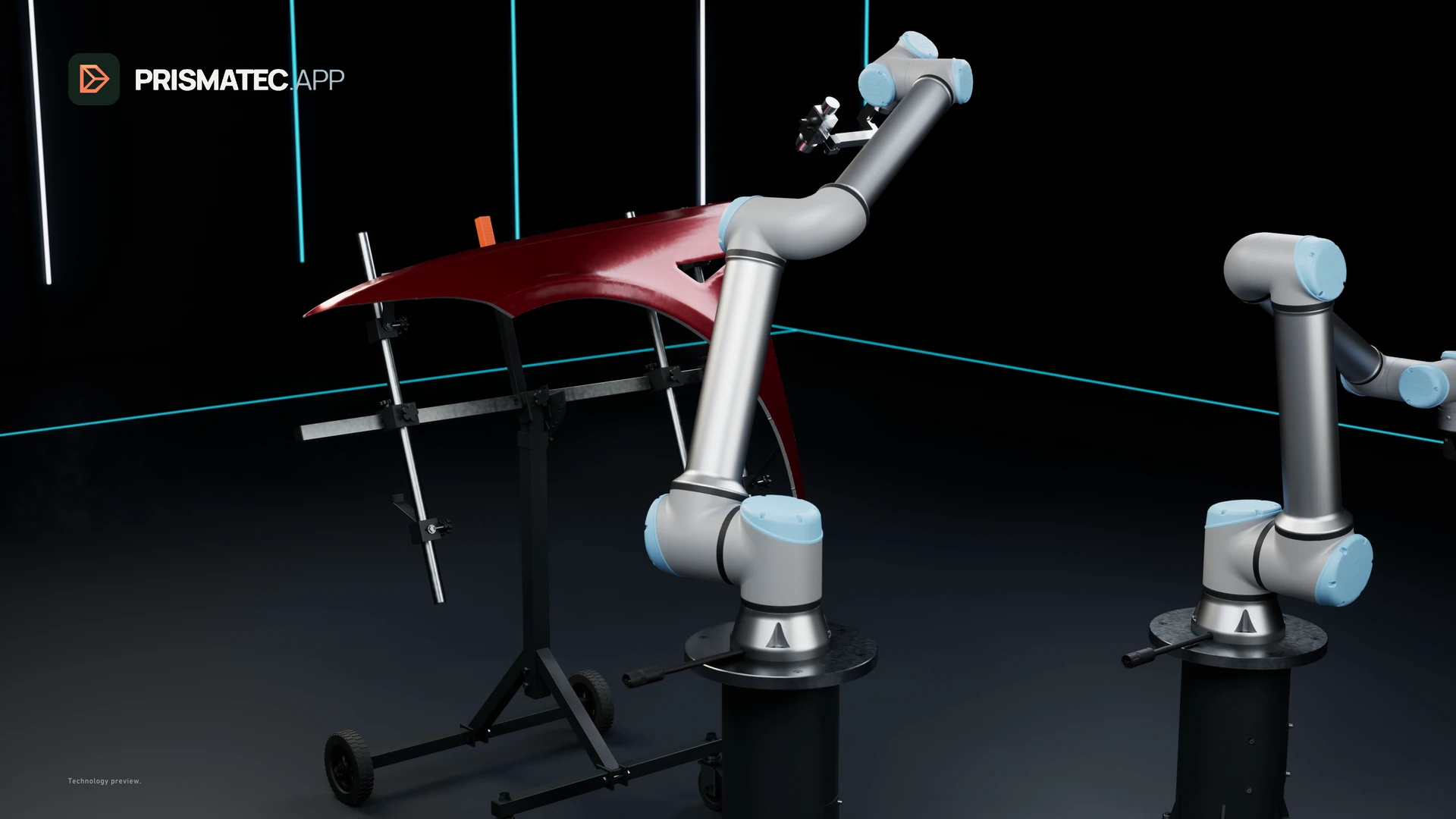
Robot program
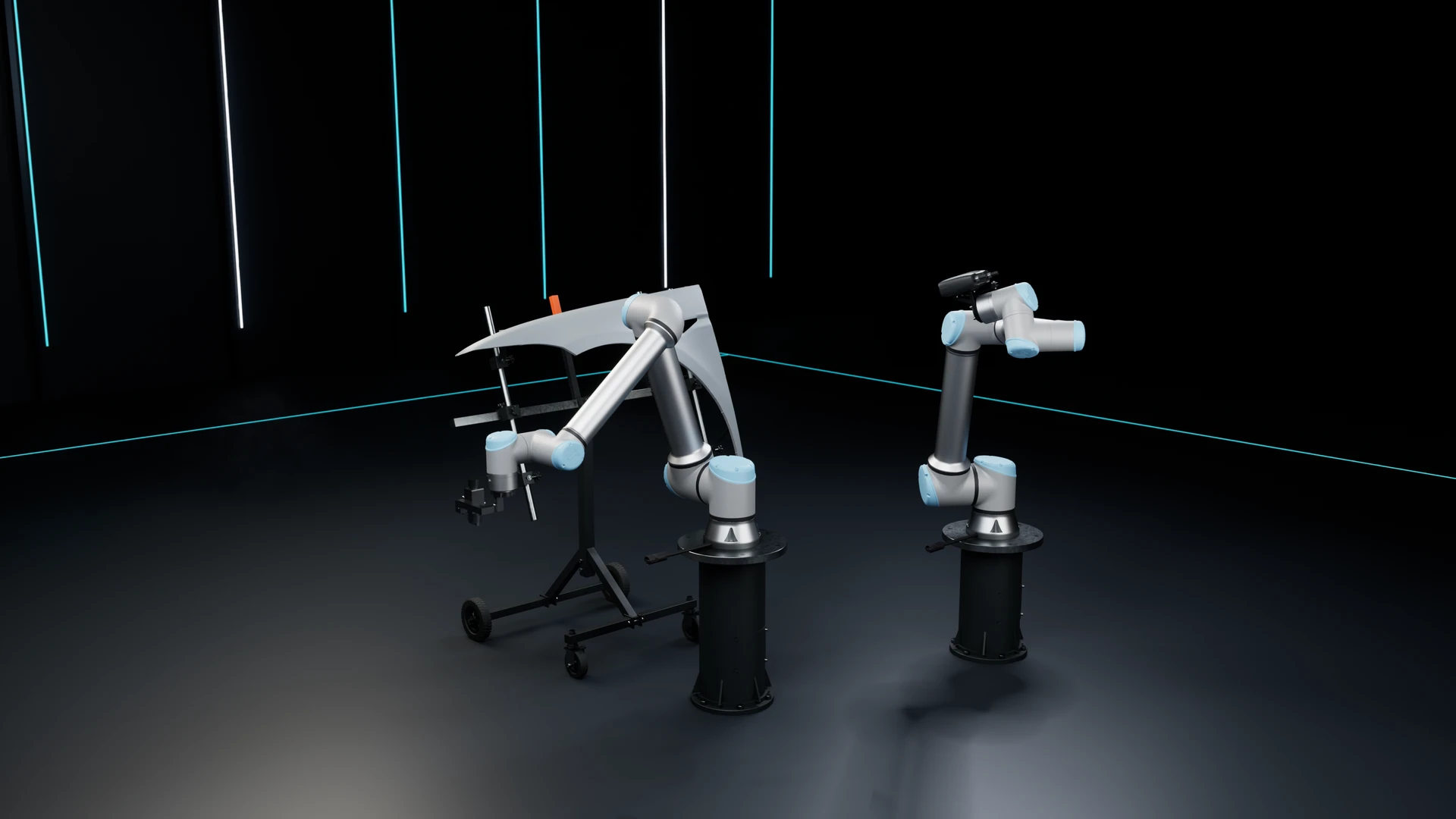
Passes, speeds and spray signals for the configured cell, checked for reach, collisions and motion feasibility.

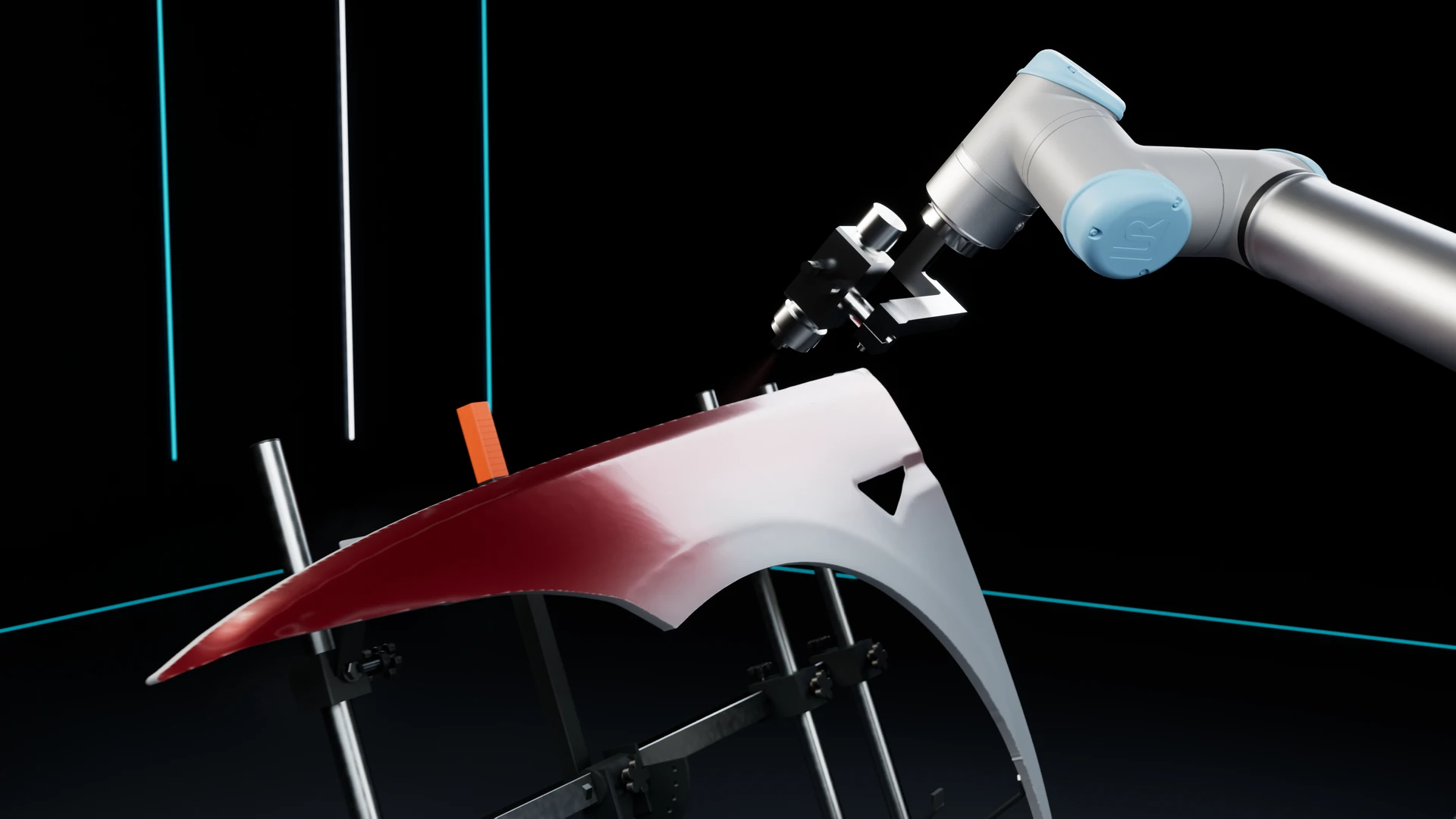
Changing parts and short runs rarely justify programming a robot by hand. So we build neural networks around the whole painting process: SI_Scan AI recognises the part in a 3D scan, SI_Path AI plans the spray, and SCAN2SPRAY delivers the robot program with the film thickness predicted before the first trial.







Missing CAD data, programming every new part and repeated spray trials make robotic painting expensive for short runs. We build AI for each of these steps. Below, the whole process on one part.
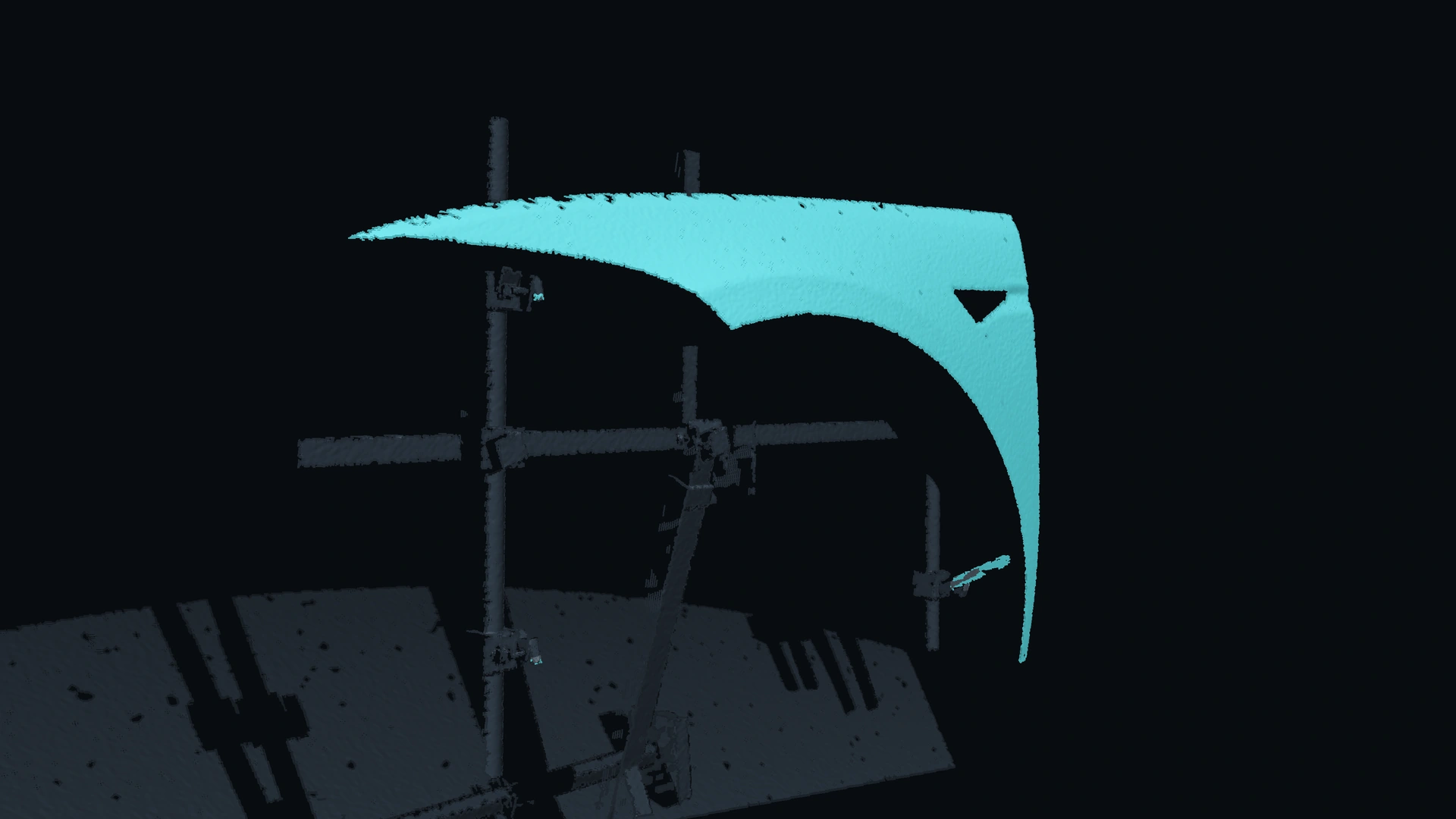
01SI_Scan AI · neural network
No CAD data? SI_Scan AI finds the part in a 3D scan, separates it from the fixture and builds its surface.
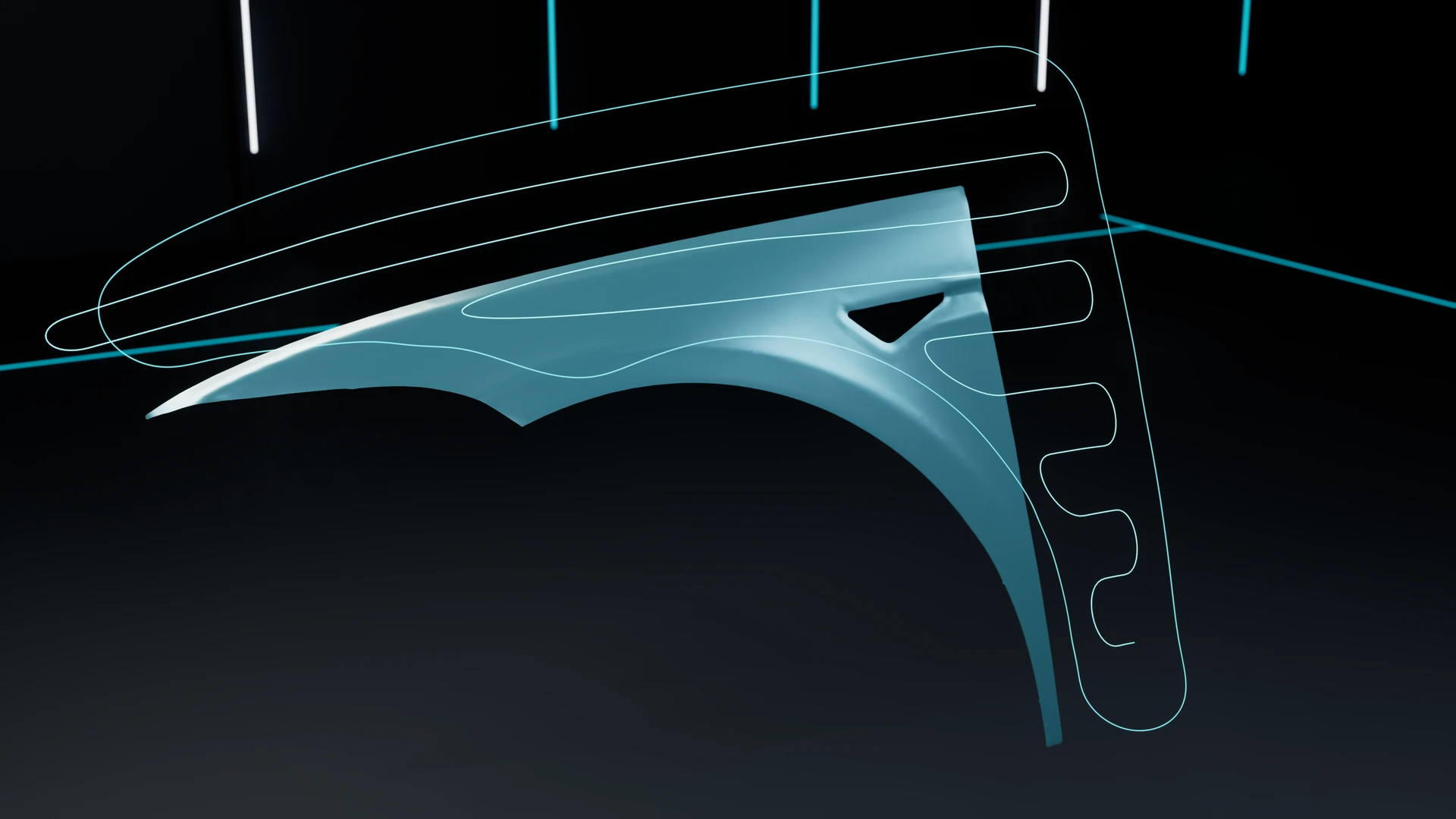
02SI_Path AI · neural network
Programming every part by hand? SI_Path AI plans the spray pattern on the main surface; the generator completes a feasible robot program.
03SCAN2SPRAY · coating model
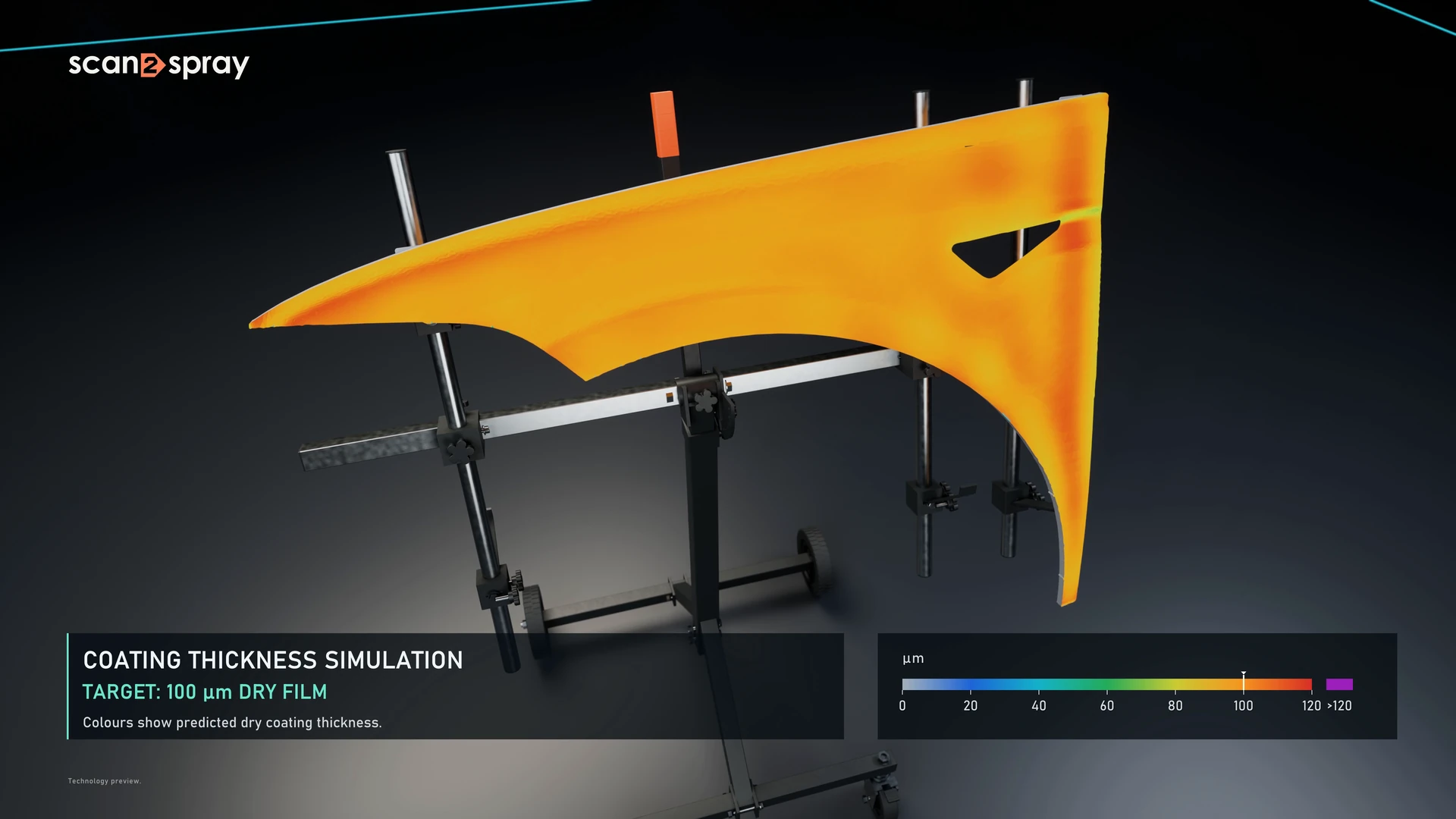
Unsure what film the path will leave? SCAN2SPRAY predicts the dry-film thickness and compares variants before the first trial.
04SCAN2SPRAY · robot integration
Programs for UR and Yaskawa controllers, checked for export and motion in controller simulators and on real robots.
05Feedback loop · AI training
Around it we are building the feedback loop: measured thickness calibrates the spray model and trains the next versions of the networks.

SI_Path learns from painting patterns generated by rules built on our paint-shop practice and on mathematical models of spraying, not from recordings of human operators. It trains on a large set of computer-generated parts and is evaluated on parts it has never seen.
In SCAN2SPRAY, the SI_Path network now sets the spray pattern and valve operation on the main surface of the part. The robot program generator adds side-wall passes, fits the speeds and checks that the motion is feasible.

SCAN2SPRAY brings part geometry, spray settings and the robot cell into one workspace. The process engineer compares variants of speed, flow, distance and overlap on the predicted coating, approves one and exports it for the robot controller.
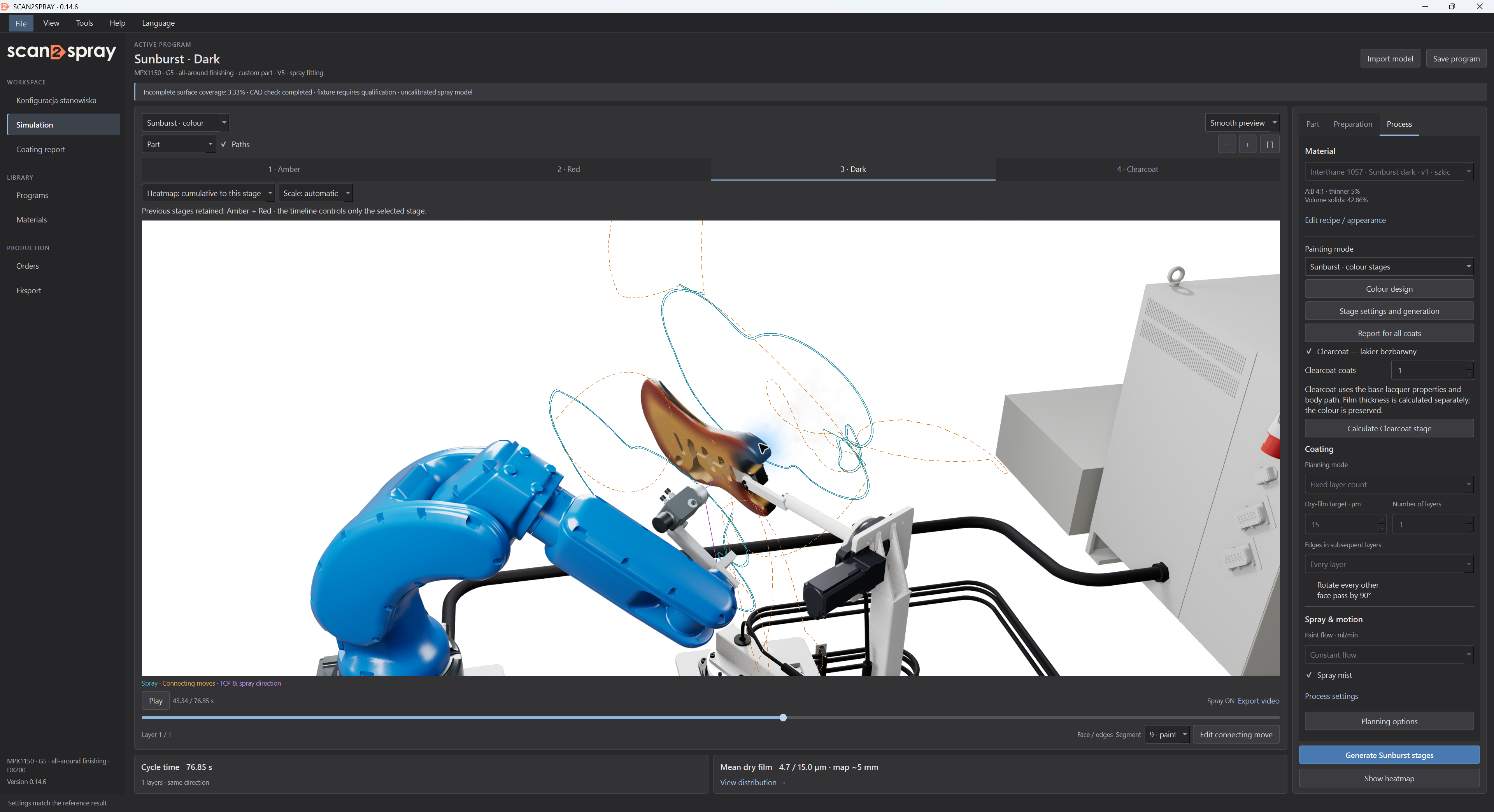
Passes, speeds and spray signals for the configured cell, checked for reach, collisions and motion feasibility.
Predicted dry-film thickness over the whole part, with areas below or above the target range marked.
Versioned programs, recipes and results, so a repeat job starts from the approved variant.
From scanning an automotive body panel, through surface reconstruction and planning, to spray simulation. Our presentation materials also show single-colour coatings, multi-stage finishes and the organisation of a robotic painting line.
Project updates and perspectives on robotic painting.
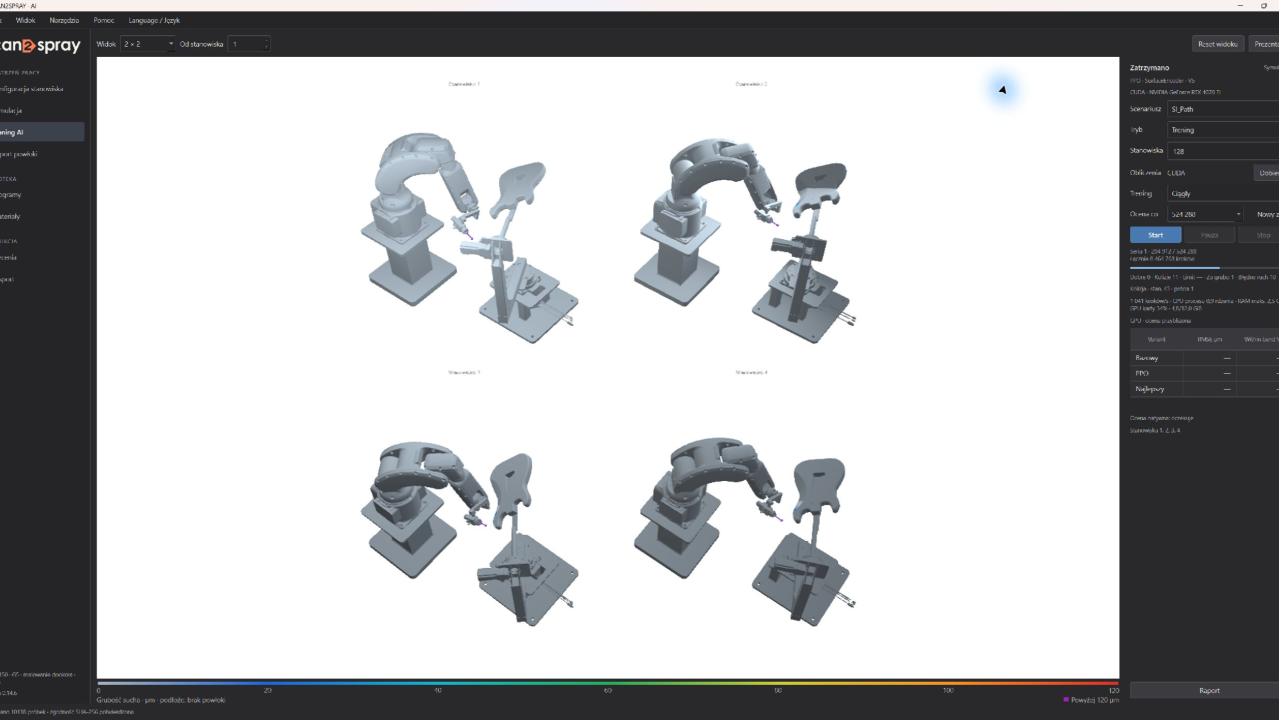
How SI_Path combines learning from programmatically generated painting patterns, practice in virtual workcells and independent checks of robot motion and coating.
Read on LinkedIn ↗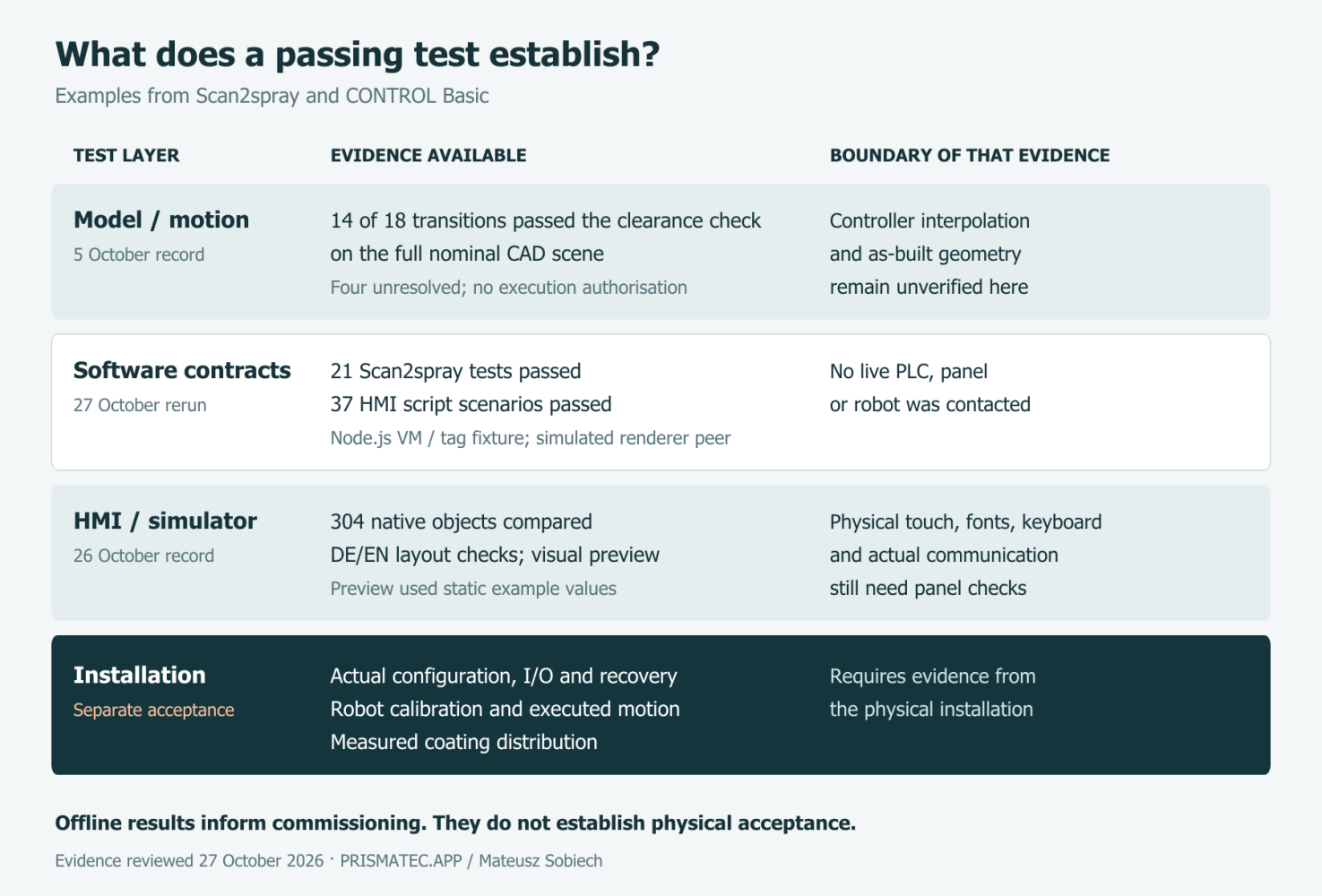
Configuration checks, PLC–HMI readback and communication tests in SCAN2SPRAY and CONTROL Basic, with a clear account of the verification still needed on the installation.
Read on LinkedIn ↗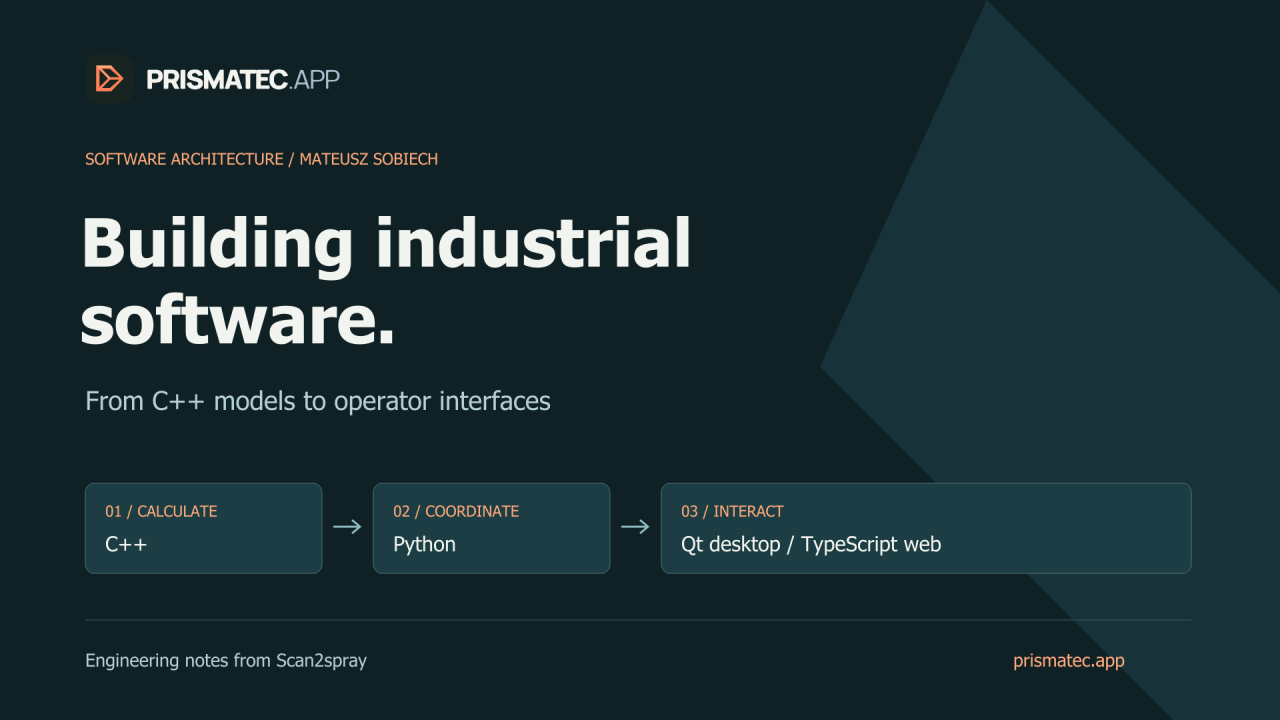
The roles of C++, Python, Qt and TypeScript in SCAN2SPRAY, from calculation and workflow to operator interfaces and checks that keep saved results tied to their inputs.
Read on LinkedIn ↗Share a model or scan, the material and applicator, and your cell configuration. We will review the application with you and define the scope of a demonstration and joint trials.
contact@prismatec.app